
Lessons:

A-5 I.M. Pei
Louvre Museum and Pyramid
Overview
- Discuss the Louvre Museum and Pyramid by I.M. Pei & Associates.
- Learn about birds-eye view and promoting exhibits.
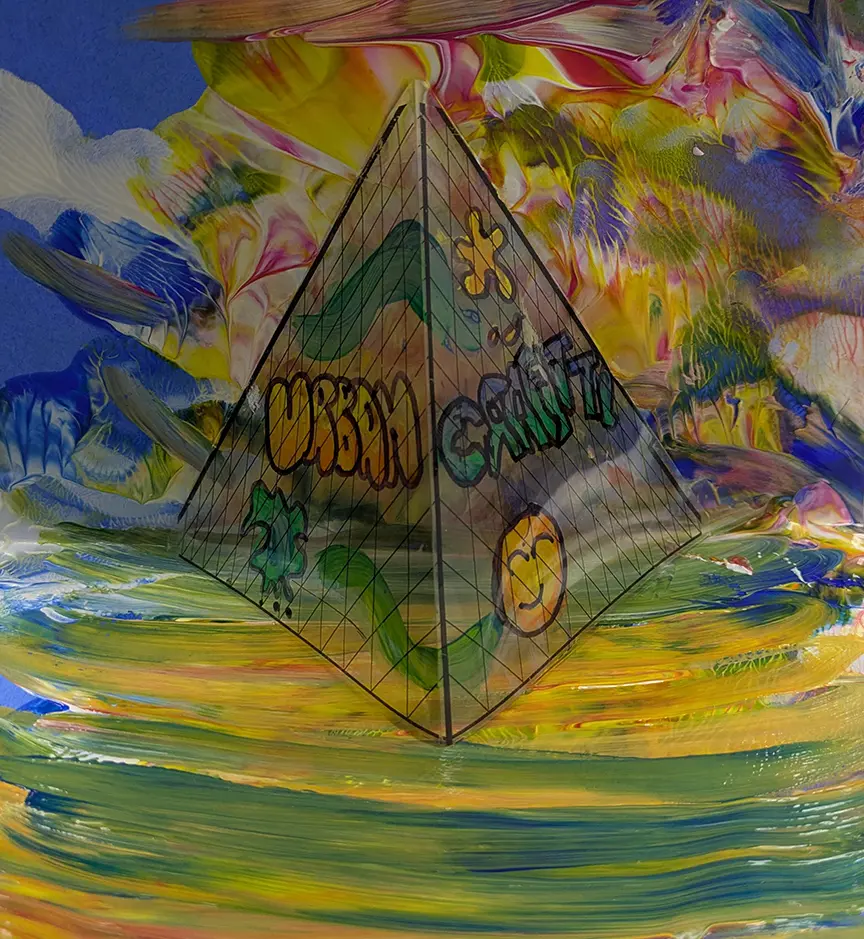
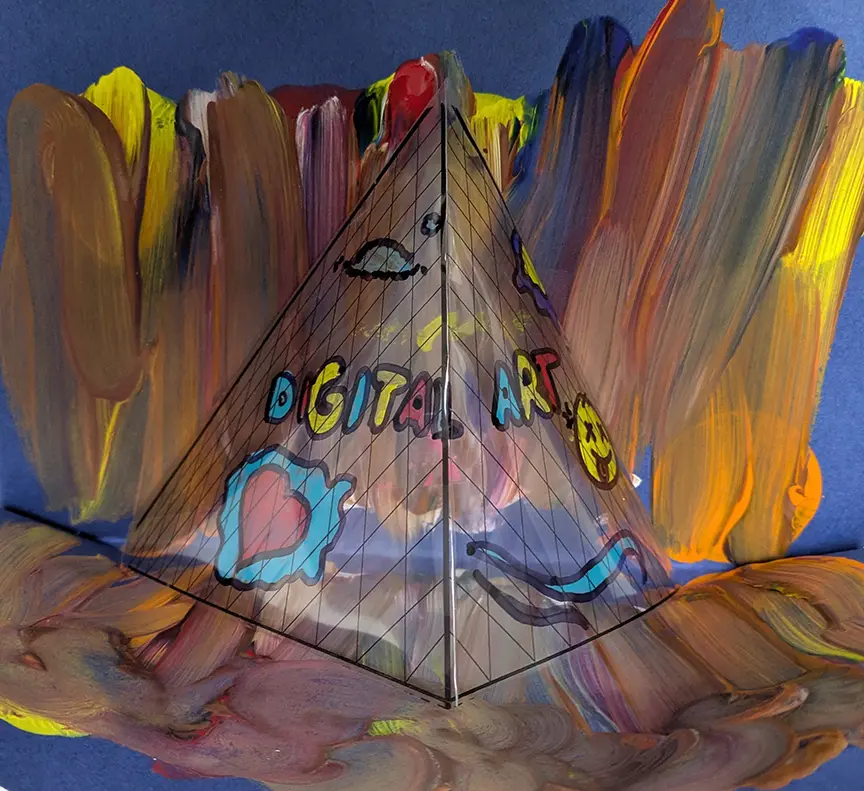
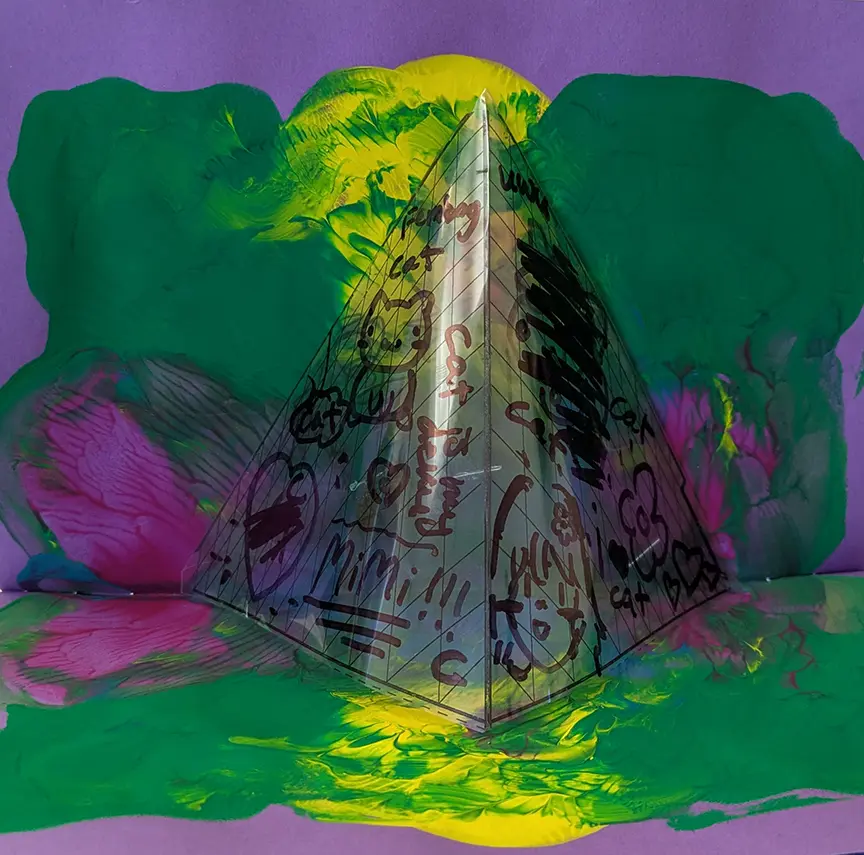
- Create an exhibit promotion for the Louvre Pyramid.
Reflection
- Who lives in the house that you created?
- What colors and objects did you add to describe mood of the house?
- What is the title of your artwork?

Louvre Museum and Pyramid by I.M. Pei and Associates, Sketch of the Louvre Pyramid Entry (1983) by I.M. Pei, black ink on tracing paper, image credit: © Pei Cobb Freed & Partners
Discussion Presentation
Discussion Questions
Do you think the Louvre buildings are works of art?
Yes, they are examples of architectural art. Pei mixed modern and classical building designs by placing sleek glass pyramids among the historical stone columned building. Pei’s creative combination made the Louvre an iconic example of architectural art.
What types of art do you think are inside the Louvre?
The museum’s permanent collection ranges from ancient to present-day art. The Louvre’s most famous piece is the Mona Lisa by Leonardo da Vinci. Museums also have visiting exhibits to view, typically for 8-12 weeks, then are packed up and shipped to another museum.
How do you think the museum advertises exhibits to people passing by outside?
Different art shows occur and the typical manner of advertisement are banners and posters hung on the stone Museum’s outside walls. Occasionally, the pyramid itself has had advertisements on it.
Biography
- I.M. Pei (eye-EM pay) was a Chinese-American architect from New York City, New York.
- Pei did a rough birds-eye view ink drawing of the Louvre, “visualizing” what the remodel could be.
- He is known for sculptural use of materials like concrete and glass, always prioritizing the human experience and natural environment.
- He is known for his architectural designs, his most famous building is the Louvre Pyramid as part of a major remodel of the Louvre Museum in Paris, France.

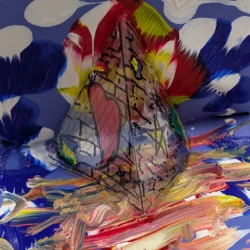
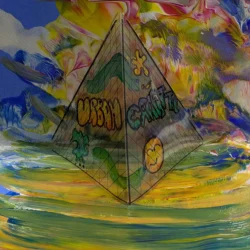
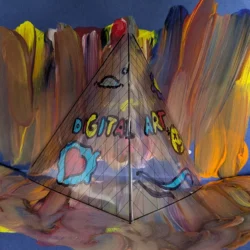
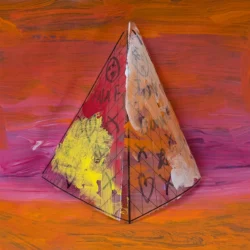



Project
Materials
- sketch paper
- 8.5×11 Louvre print
- 5.5×8.5 Pyramid transparency print
- drawing pencil
- permanent black marker
- tempera paints
- 1/2 in. tempera brush
- 1/4 in. tempera brush
- water container
- paper towels
- stapler
- tape (helpful)
Warm Up & Brainstorm
- Sketch design: trace general contour of cut out pyramid on sketch paper and design advertising.
Project Directions
Louvre Pyramid Exhibit
1. Pre-fold pyramid.
Fold and unfold at the three heavy black lines of the pyramid.
Note: toner may chip a bit.
2. Trace design sketch.
Lay transparency on sketch, trace design with black permanent marker, and flatten out.
Tip: tape edges down. NOTE: Students black marker the outside (fold is up) and paint on the inside (fold is down) of the pyramid.
3. Paint the design.
Do not use water with the paint, it will bead and not stick to the plastic. Set aside to dry.
4. Paint the grounds.
Fold printed Louvre paper in half. Paint a new ground design.
5. Attach pyramid.
Staple 3D pyramid back and tabs to the folded Louvre print.
6. Give exhibit a title.
Pre-Lesson Preparation
- Pre-prep: cut pyramid transparency in half and then cut bottom corners.
- Note: only bottom of the transparency pyramid has dotted lines with tabs to cut. Top corners are folded and stapled together onto the Louvre Museum print.
- Optional: two ~30 min. sessions: 1. Sketch and trace design and 2. Paint pyramid and grounds.
Day of Lesson Setup
- Demo drawing design with black marker.
- Demo folding and flattening pyramid.
- Tip: Have tape on hand to tape the pyramid down onto the sketch paper for tracing step.
- NOTE: Students black marker the outside (fold is up) and paint on the inside (fold is down) of the pyramid.